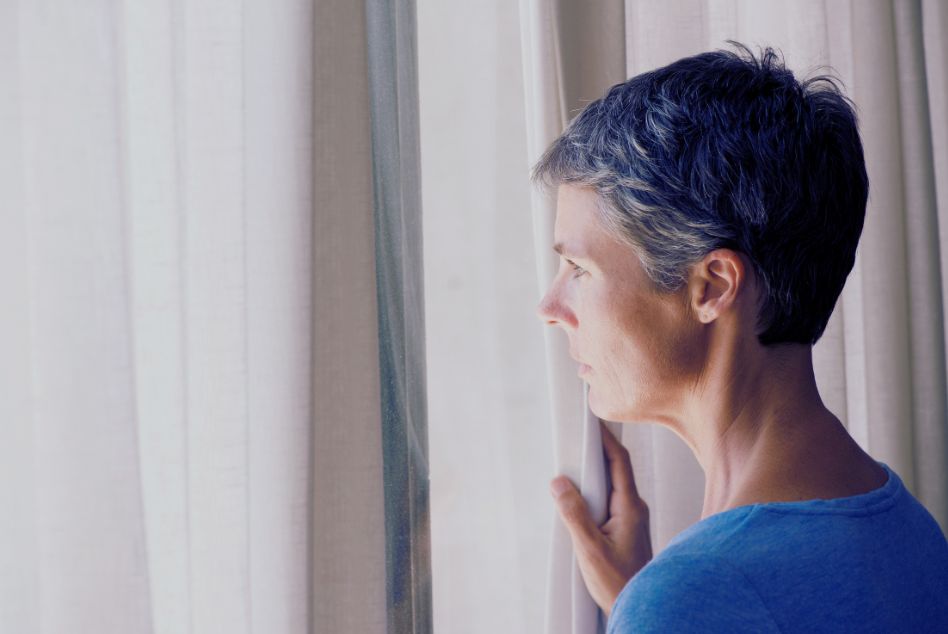
The Fastest-Growing Homeless Population Is Hiding in Plain Sight
For many people, the picture that comes to mind with homelessness is a man on a city street, sleeping under cardboard or pushing everything he owns in a trolley, and yes, individual men are still the largest visible group experiencing homelessness.
But the face of homelessness is getting older, and it's getting older fast. The median age of a single homeless adult has shifted from 35 in 1990 to around 50 by 2010, which tells you something very important about what has been building underneath the surface for decades. And women over 50 are standing right at the nasty little crossroads of it. This isn't a sudden moral collapse. This isn't women “making poor choices”. This isn't a personal budgeting failure, as if the right coupon folder and making one's morning coffee at home could somehow repair forty years of economic extraction.[1]
What we are seeing now is the predictable end-stage of a working life the economy was never built to recognise as economically productive.
The official numbers tell us two things very clearly. In the United States — where the data is most comprehensively tracked — older adults, usually counted as those 55 and over, are described by the National Alliance to End Homelessness as the fastest-growing group of people experiencing homelessness. The same analysis shows that women's homelessness is increasing at a faster pace than men's, even though men still make up the majority of those counted.[2] So if you are looking for the woman in the data — the woman who is 52, 58, 63, who worked, cared, loved, cooked, washed, drove, soothed, made appointments, remembered birthdays, stretched the grocery money and put everyone else's needs before her own teeth — you have to look at the intersection of those two trends, and it's at the intersection where women often vanish.
A woman does not usually become homeless at 57 because one thing went wrong. She becomes homeless because a thousand things were never counted properly in the first place.
She may have worked for wages her whole life while earning less than the men beside her. The wage gap is a global pattern. For example, in the United States women working full-time still earn about 81 cents for every dollar earned by men, and over a forty-year career that can mean more than half a million dollars in lost income before we even get to retirement savings, investment growth, pension credits, or the simple fact that money makes more money when you are allowed to keep enough of it.[3] The figures differ by country but the pattern is similar. Compounding is marvellous when it works for you but when it works against you, it's a quiet little thief in sensible shoes.
And then there is the “invisible” work women did that never arrived in a pay packet at all.
Caring for children, ageing parents, husbands who had the “real” job. Taking the part-time role because someone had to do school pickup. And let's not forget her leaving the workforce for a few years because childcare cost more than the wage. She turned down the promotion because the household would have collapsed without her unpaid labour. This labour fed families, held marriages together, kept men employable, kept parents out of institutions, kept children alive and reasonably clean. That's no small achievement, mind you, and yet when retirement arrives, the system looks at her record and says, “Well, you didn't earn very much, did you?”
How convenient.
The whole thing was built on the assumption that women would be attached to men. That a husband would provide the wage and a marriage would last forever. A home would be paid off and a woman's caregiving would be compensated indirectly through family stability, inheritance, widowhood benefits, or a pension that someone else earned. That was the bargain, spoken or unspoken. But the bargain has cracked, and women are the ones standing in the cold air coming through it.
Take widowhood as a salient example. When a husband dies, the rent does not reduce by half. Nor does the electricity bill, and the leaking roof doesn't miraculously adjust to the number of occupants in the house. The car still needs tyres and the prescriptions still cost money. If a couple had two Social Security cheques coming in, the surviving spouse will generally keep the larger benefit, but the household has still gone from two checks to one. Social Security itself says survivor payments for spouses and ex-spouses can start at 71.5% of the deceased spouse's benefit and rise as high as 100% at full retirement age, but the survivor does not get both checks added together.[4]
This is why widowhood can be financially brutal for women. Women tend to live longer than men, are often younger than their husbands, and are more likely to be the one left trying to pay fixed household expenses with a single monthly cheque. The Centre for Retirement Research describes exactly this: two Social Security cheques become one, and women more often have to adjust to those fixed expenses after the death of a spouse.[5] And adjust is such a tidy word, isn't it? As if we are talking about moving a cushion on the couch, and not sitting at the kitchen table with a calculator, deciding whether you can afford both blood pressure tablets and the heating bill.
Then there is grey divorce.
No woman should stay in a miserable, unsafe, belittling, soul-sucking marriage because it makes financial sense. But we do need to tell the truth about what happens financially when a woman exits a long marriage after 50, because attachment, fear, shame and relief can all cloud the practical matters, and practical matters have a nasty habit of becoming urgent at 3am.
Research on grey divorce has found that women experience a 45% decline in standard of living after divorce, compared with 21% for men, and both women and men experience roughly a 50% drop in wealth.[6] That's not a small bruise, it's a structural injury.
It's one thing to divorce at 32, when you still have decades to rebuild superannuation, retirement accounts, credit, career momentum and housing security. It's another thing entirely to divorce at 57, with a patchy employment history because you carried the unpaid work of the household, a retirement account that was never in your name, and a rental market that seems to believe every woman should earn like a corporate lawyer while living with the modest needs of a houseplant.
And this is where the “tweener trap” becomes so cruel.
At 50 or 55, a woman may be too old for the labour market to treat her kindly, but too young for many senior supports. She may be too old to be seen as a “family” case, because the children are grown or gone, but too young to qualify for housing that starts at 62. HUD's Section 202 Supportive Housing for the Elderly, for example, funds and subsidises rental housing for low-income adults with disabilities and residents aged 62 or older.[7] Helpful, yes. Necessary, yes. But what about the woman who is 54 and living in her car because her body has been worn down by decades of low-paid work and unpaid care? What about the woman whose knees, teeth, nerves and sleep have all aged faster than the calendar?
The system looks at her birth date and says, not yet.
She's not yet old enough, poor enough, disabled enough, visible enough, or in the right category. Not yet in the right queue or sleeping somewhere we can count.
And the count was never designed to find them.
A woman facing homelessness may not be in a shelter bed. She may be on a sister's couch, though the sister's husband is making it clear the arrangement is wearing thin. She may be in the spare room of a friend who drinks too much. She may be sleeping in her car behind a supermarket because at least there are lights and cameras. She may be staying with a man she does not want to stay with because the alternative is the street, and the street has never been a neutral place for women.
So when we talk about homelessness, we must ask: what are we actually counting?
HUD's Point-in-Time count is a one-night estimate of sheltered and unsheltered homelessness, and HUD defines unsheltered homelessness as sleeping in places not designed for regular sleeping accommodation, like tents, train stations, sheds or unfit garages.[8] That matters. But it also means that a great deal of women's homelessness is hidden in arrangements that are unsafe, unstable, humiliating, or temporary, but not always visible to the official eye. A woman can be homeless while still having a key in her hand. It just may not be her key.
And all of this is happening inside a housing market that is squeezing people from every side.
So what do we do?
First, we need to recognise homelessness risk much earlier for women over 50. Not once she is sleeping outside, or when she is medically fragile. Not once she has burned through every friendship and favour and is sitting in an intake office trying not to cry under fluorescent lights. The warning signs are not mysterious; we simply trained ourselves not to see them.
Second, lower the age threshold for homelessness prevention and senior-style support when people are prematurely aged by poverty, trauma, disability, caregiving and housing instability. A woman who is 52 and homeless isn't in the same position as a housed, well-paid 52-year-old planning a hiking holiday and debating whether to go blonde again. Homelessness and stress age the body. Cold, fear, poor sleep, bad food, untreated pain and constant vigilance age the body. The services should recognise that.
Third, expand deeply affordable housing and fund them at the scale of the problem. We do not need another glossy awareness campaign telling women they are strong. Women know they are strong. They've been carrying civilisation on one hip and a washing basket on the other for centuries. What they need is rent they can pay.
Fourth, fix the asset limit. Raise it properly. Index it. In the US, stop pretending $2,000 is a meaningful buffer in a country where a single emergency can swallow that whole before lunch.
And fifth, we need to get much more practical with women before crisis arrives. If you are divorcing after a long marriage, or even thinking about it, don't sign anything just because you're exhausted and want the whole thing over. Exhaustion isn't a legal strategy.
The specific instruments vary by country — retirement accounts, pension rules, survivor benefits, and social security entitlements all work differently depending on where you live — but the underlying principles hold everywhere.
Know what retirement assets exist in the marriage, in whose name they sit, and get proper legal advice on how they're divided. A divorce decree and a fair division of assets are not automatically the same thing. Don't assume the money will arrive just because the settlement says it should.
Understand what you are entitled to as a surviving or former spouse under your country's pension and benefits system. These entitlements often have qualifying rules around the length of the marriage or your age at the time of claim. The date matters. It may matter more than anyone at the kitchen table wants to admit.
Make sure you can qualify for housing, utilities, insurance and credit in your own name. A woman can walk out of a marriage emotionally ready and find that the financial world does not fully recognise her as an independent adult because everything was in his name. It happens more than it should. Plan for it before you need to.
And if you are widowed, don't let anyone rush you into tidy decisions while you're grieving. Grief makes numbers slide. Get help with entitlements, housing costs, accounts and debts. Don't assume the system will arrange itself in your favour. It rarely does that for women unless someone makes it so.
Have the difficult conversation with the women you love before the crisis arrives, and not when she's already in the intake office, but now, while there's still time to make different choices. What does her financial picture actually look like? Does she have independent credit, income, documents? Does she know what she's entitled to? These conversations are uncomfortable. They're nowhere near as uncomfortable as homelessness, because ageing into homelessness isn't evidence of individual failure.
They're evidence of a false ledger.
The economy counted the man's wage, but not the woman's unpaid labour that made that wage possible. It counted retirement contributions, but not the caregiving years that interrupted them. It counted home ownership, but not the woman whose name was not on the deed. It counted marriage as protection, but not the cost of divorce, widowhood, violence, illness, age discrimination, rent inflation, or simply living too long in a system that only values women when they are useful to someone else.
So the next time you hear about an older woman sleeping in her car, do not ask, “How did she let this happen?”
- Ask what was taken from her, year after year, while everyone called it normal.
- Ask who benefited from her unpaid work.
- Ask why a lifetime of care does not buy care in return.
- Ask why senior housing begins after so many women have already fallen.
- Ask why such a wealthy country can count every transaction, every click, every credit score, every overdue bill, every dollar of debt — but somehow cannot find women until they are already outside.
This isn't bad luck, it's the predictable outcome of an economy that extracted women's labour, discounted women's wages, attached women's security to men, punished women for caregiving, and then acted surprised when older women began disappearing into couches, cars, shelters, motel rooms and unsafe arrangements that no woman should have to call home.
We can see them now. And once we can see them, we have no excuse for looking away.
How You Can Help
Services supporting women experiencing homelessness are chronically underfunded. The most useful things you can do are also the most direct: find your local women's shelter and donate. A small recurring contribution beats a single larger one because it lets organisations plan. If you can't give money, give time. And advocate for increased government funding, because the gap between need and resource isn't a funding mystery, it's a political choice.
In Australia: Homelessness Australia can help you find services in your state or territory.
In the US: The National Alliance to End Homelessness maintains a service directory.
In the UK: Shelter and St Mungo's both run dedicated women's programs.
Footnotes
- The median-age shift is reported in a U.S. literature review on older adult homelessness, which states that the median age of single adults experiencing homelessness rose from 35 in 1990 to 50 in 2010.
- The National Alliance to End Homelessness describes older adults 55+ as the fastest-growing group of people experiencing homelessness in the United States, and reports that women's homelessness increased faster than men's in the 2024 PIT count.
- The gender pay gap is documented across all wealthy economies. U.S. figures: AAUW reports that women working full-time earn 81 cents for every dollar earned by men, with estimated losses of $542,800 over a 40-year career. Treasury also notes that women hold fewer retirement assets and are more likely to be impoverished late in life.
- SSA states that spouse and ex-spouse survivor benefits start at 71.5% of the deceased spouse's benefit and may rise to 100% at full retirement age; SSA also states that if someone is eligible for survivor and another benefit, the payments are not added together.
- The Center for Retirement Research explains that a surviving spouse may go from two Social Security checks to one, and that widows more often face the adjustment of paying fixed household expenses with one check.
- Lin, Brown and Carr's study on grey divorce found that women experienced a 45% decline in standard of living after divorce, compared with 21% for men, and that both experienced roughly a 50% drop in wealth.
- HUD describes Section 202 as housing funding for low-income adults with disabilities and residents aged 62 or older.
- HUD's 2025 AHAR was published in May 2026 and reports 745,652 people experiencing homelessness on a single night in January 2025; NAEH describes the PIT count as HUD's annual one-night census of sheltered and unsheltered homelessness and gives HUD's definition of unsheltered homelessness.