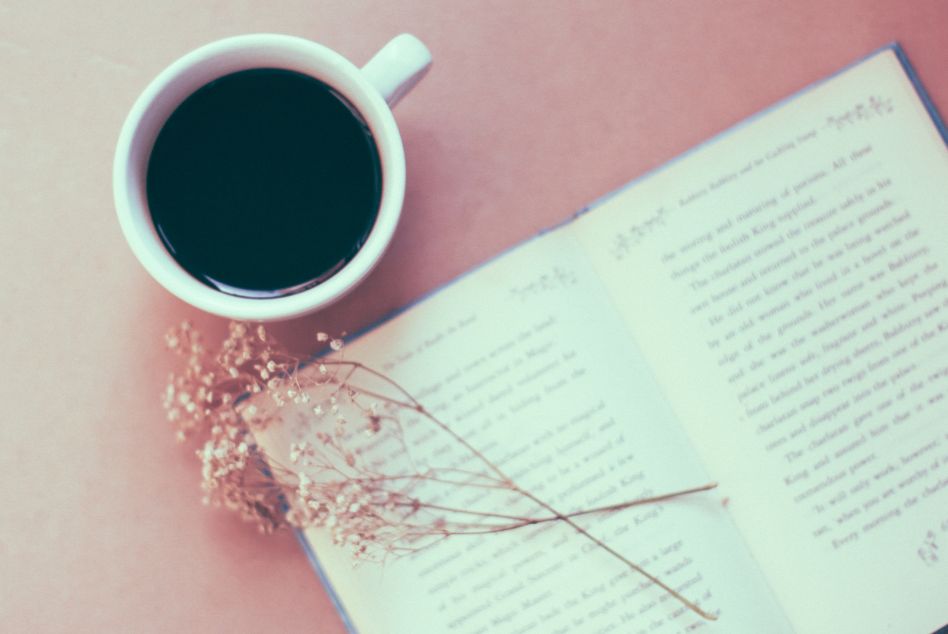
You shake your head, because you've done it again. You know you're not one of those women who can't finish a thing without getting distracted by six other things, although to be honest, most of us are running at least six background tabs at any given moment. And still, the coffee is cold.
You sat down as you looked at the light moving across the tiles and glanced at the scarlett honeyeater as it flicked through the hedge on the boundary. For one small moment you thought, oh, this is nice.
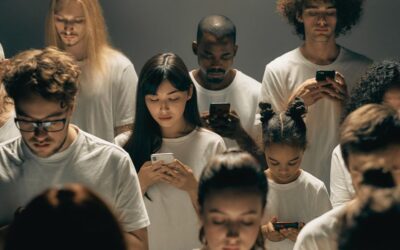
But in a millisecond something pulled you back. Was it a headline you read last night, a ping on your phone heralding another BREAKING NEWS! moment? A quick repeating inventory of the bills that must be paid this week, or was it something that has nothing to do with you and everything to do with the collapse of democracy, civilisation, and the climate?
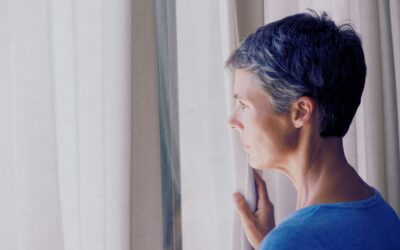
And there you are again with your shoulders up, jaw tight and your mind running the little checks it runs without asking you first. What has happened now? What does this mean? What do I need to know? Who do I need to warn? What should I have done already? What has slipped through the cracks while I dared, foolish woman that I am, to look at a bird and enjoy the morning?
We keep being told this is anxiety, and I'm bloody angry.
This Is Not Anxiety. This Is Hypervigilance.
Of course, some of it is anxiety. We're human beings with nervous systems, mortgages or rent, hormones, ageing parents, children, dogs who eat things they absolutely should not eat, and inboxes that seem to reproduce overnight. But not all of this is anxiety in the way that it's sold to us. Not all of it belongs in the neat little category of personal failing, or overthinking, or not having done enough breathwork.
What a lot of women are feeling is hypervigilance, and hypervigilance makes perfect sense when your environment has never been reliably safe.
We're not imagining it and we never were.
The guilt of relaxing is one of the strangest things to explain until you see it in your own body. The cup of tea you don't quite enjoy. The novel you want to read but can't quite fall into. The Sunday in the garden where half of you is deadheading the basil and the other half is somewhere out in the world, scanning the horizon for the next awful thing.
A woman who cannot properly rest is a woman whose attention is still available. Her labour is still available. Her nervous system is still available. Her ability to respond, soothe, organise, remember, anticipate, absorb and keep the whole bloody thing moving is still available.
We're taught to think of exhaustion as something that happens because we personally failed to manage our lives well enough. We took on too much, or else we didn't set boundaries, meal prep, meditate. We didn't use the planner. We didn't manifest the right energy, and honestly, if I hear one more woman being told to regulate her nervous system while the entire social order is busy poking it with a stick, I may need to lie down with a cold cloth on my head.
What Has Actually Been Taken
The realisation hits that what's been taken from us is not only time, or money, or safety, although God knows that would be enough.
It's the ordinary ability to live inside a day without having to defend the day from everything trying to get at it.
They've taken away from us the assumption that tomorrow would probably be okay, the ability to plan with any reasonable confidence, the small, lovely spontaneity of booking a weekend away, or starting a course, or planting a tree because you imagine being there to sit under it one day.
They've taken the woman who used to read novels without guilt, or who could watch a film without pausing it to check the news, who gardened on Sunday without half her mind on the price of groceries, the state of the world, the next election, the latest man with a microphone explaining why women's freedom has gone too far.
What's invisible to most is that this hasn't arrived evenly.
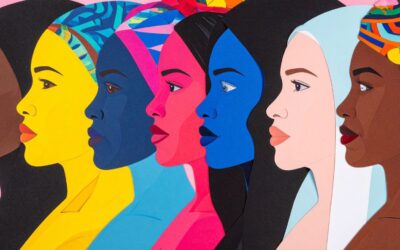
Some women have lived with this level of watchfulness for generations. First Nations women, migrant women, disabled women, poor women, queer women, women living with violence, women whose bodies have always been treated as public property, women who've never had the luxury of assuming that the institutions around them were built for their safety.
So no, this is not new to everyone, but it is spreading, and the invisible is becoming increasingly visible.
The infection has moved into the bloodstream of the whole culture, and women, as ever, are feeling it first and carrying it longest.
You can tell when a culture has stopped imagining forward. It begins obsessing over enemies and nostalgia, then starts rummaging around in the back shed for old punishments, old hierarchies, old family arrangements, old stories about who should serve whom, as if the answer to collapse is to reheat something miserable from 1953 and serve it up as good old wholesome tradition. Talk to women, particularly marginalised women, and see how that perspective tracks.
The future starts to shrink, and not in the abstract, or in some academic way that requires a committee. I mean the actual future, the one you thought you might have. The one where your daughter would have more choices than you did. The one where women's freedom, once gained, would stay gained. The one where work would pay enough, housing would be possible, the climate would hold, and men might finally have done enough inner work that women could stop teaching adult males the difference between a feeling and a fact.
Those futures still haunt us, because they're the lives we were promised, or almost promised, or allowed to glimpse, before the door was quietly moved.
The Lie Dressed Up as Liberation
Next came the lie dressed up as liberation.
“Having it all.”
Helen Gurley Brown's Having It All was published in 1982,1 and it matters that it was aspirational. It matters that the message had glamour and possibility in it. Women were told they could have career, love, sex, money, family, selfhood, and women believed it because why wouldn't we? Women had been told for centuries to be smaller, quieter, dependent, grateful, careful, and here came a message that said, more or less, no darling, take the lot.
There was something intoxicating in that, and I don't want to pretend there wasn't.
Women wanted more because women deserved more. Wanting a life, a full life, was never the problem. Wanting money, pleasure, work, influence, love and autonomy was never the problem. The problem was that women were invited through new doors, but the building stayed exactly the same.
Then came Lean In in 2013,2 and corporate feminism put on its neat blazer and told women to sit at the table, speak up, negotiate harder, push through, believe in themselves and stop holding themselves back. Sheryl Sandberg's book was published in March 2013, and the broader Lean In project still frames itself around helping women achieve their goals and leadership ambitions.
And again, we listened — of course we did.
We're very good at listening to instructions that promise freedom if only we can perform them correctly. Some of the advice was useful in the way a ladder is useful if the house is not on fire. But the deeper message was much too convenient for the institutions that benefited from women's exhaustion. The problem was still being located in women. We were not confident enough, strategic enough, ambitious enough, or resilient enough. We were leaving before we left, hesitating before we asked, doubting before we claimed.
And so women did the work and got the degrees, entered the workforce in greater numbers, learned to lead meetings, manage teams, breastfeed in toilet stalls, answer emails after bedtime, return to work with stitches still healing, negotiate salaries, remember the excursion note, buy the birthday present, organise the aged-care appointment, keep the friendships alive, know where the sunscreen was, keep a career moving, keep a household moving, and somehow still be asked what they were doing for self-care.
The problem was, the matching shift from men didn't arrive, at least not properly.
Not in domestic labour, emotional labour, care work, institutional power, or even in the daily assumption that the home, the children, the ageing parents, the social fabric, the noticing, the remembering and the repairing were everyone's work equally.
And so, women who were told they could have it all ended up doing it all.
This is what happens when you add women to an unreconstructed structure and call it progress. In Australia, the 2025 Status of Women Report Card says women do an average of 32 hours of unpaid work and care each week, nine hours more than men, and OECD reporting continues to show women spending more hours in unpaid work than men across member countries.4 I think that's being generous.
So when the self-care industry arrived with its candles, bubble baths, gratitude journals and bamboo-lidded little jars of overnight oats, it wasn't entirely wrong about what women needed. Rest is real and so is pleasure. The problem was what it was selling those things as — a substitute for structural change, a private solution to a public problem, and a way to make the wound more bearable rather than less necessary.
A bath is not nothing. Sometimes the bath is load-bearing. But a bath won't redistribute domestic labour, and a scented candle won't make an unsafe world safe. The self-care industry understood what women were starved of — and then monetised the starvation without touching its cause.
And it's nice to think a gratitude journal will make an unsafe world safe, and even if that were true, who has time to write in one?
When Women Named the Pattern
Then along came #MeToo.
Now women have always been telling the truth, to each other — in kitchens, bathrooms, car parks, inboxes, whispers and group chats. Tarana Burke had begun “me too” work years earlier, and in October 2017 the phrase became a global viral moment after the Weinstein reporting and Alyssa Milano's tweet.3
And for one brief moment, it felt as though the air had cracked open.
Women weren't naming incidents anymore. They were naming patterns, not just about a bad man, industry, or misunderstanding. There was a recognition of pattern, structure, silence, permission, protection. It was the old machinery by which women were harmed, disbelieved, managed, shamed, blamed and moved quietly out of the way so powerful men could keep being powerful.
There was a feeling to that time, wasn't there? It was a dangerous little feeling that something had finally shifted, and we would have our moment in the sun.
The Slap That Followed
The slap that followed showed us how little had shifted.
The backlash we're living through now isn't just a mood. It's not just podcast bros eating protein powder and rage for breakfast. It's not just memes, court decisions, political speeches, comment sections, legislation, algorithms, tradwife fantasies, or men with ring lights explaining civilisation from a gaming chair.
It's a correction. It's the system trying to return to its default setting.
#MeToo scared the institutions that benefit from women's silence. It scared men who'd mistaken women's compliance for their consent. It scared workplaces that had relied on whisper networks instead of accountability. It scared political movements that depend on women being too tired, too ashamed, too divided or too busy to organise. UN Women reported that in 2024 nearly a quarter of governments worldwide identified backlash on women's rights, alongside broader threats to gender equality and women's rights work.5
The concessions were never enough.
They were managed inclusion. Women were allowed into the building, but the architecture remained the same. The building was not designed for women's bodies, women's working lives, women's safety, women's reproductive realities, women's caring responsibilities, women's fear, women's pain, women's interrupted careers, or women's need to move through the world without calculating the risk of men.
Or else the glass ceiling became the glass cliff, and those women who were able to reach the pinnacle of corporate or public life were shoved right over it, while the man she had replaced was given an eight-figure bonus and invited back while she lay bleeding at the bottom of the cliff. The punishment was always swift and final.
Then they sent us to resilience training.
You should be stronger. Softer. Calmer. Firmer. More confident. Less aggressive. More ambitious. Less selfish. More attractive. Less distracting. More maternal. Less unavailable. More grateful. Less difficult. More organised. More spontaneous. More natural. More polished. More empowered. More relaxed.
Honestly, it is a wonder any of us can digest properly.
The system knows that exhausted women don't organise or imagine alternatives.
Exhausted women do not have the spare life force to look up from the laundry, the inbox, the news, the roster, the family crisis, the appointment reminder and the latest global emergency, and ask the useful question: who benefits from me being this tired?
The boss babe era understood this perfectly, even if it never said so plainly. Hustle culture wrapped extraction in pink branding and told women that powering through was empowerment. The demand to keep going was made to look glamorous. The burnout was renamed ambition. The absence of support was reframed as a mindset issue.
Read more: The Rise of Fascism · Liberty Lost · Understanding the 4B Movement
Refusal Is Different
No more.
And no, this isn't despair, because despair is what happens when you keep trying to turn an impossible arrangement into a personal development opportunity.
Refusal is different, because it's the moment your eyes are suddenly clear.
If the structure was never built for us, optimising our performance inside it is not always strategy. Sometimes it is compliance with a system designed to extract from us indefinitely. There comes a point when the most rational thing a woman can do is stop feeding the machine with her attention, her emotional labour, her nervous-system energy, her endless willingness to understand everyone else's wounds while her own are treated as an inconvenience.
You're allowed to grieve what has been taken, because some losses are real, and visceral, and they deserve to be named before anyone starts flinging silver linings around the room.
You're allowed to feel the accumulated weight of one step forward and two steps back without calling that feeling weakness. You're allowed to let the coffee go cold and not make it mean anything about your worth. You're allowed to rest before your body stages a coup, which it will do eventually, and usually at a very inconvenient time because the body has no respect for your calendar.
Read more: What Feminism Means Now · On Finding the Truth in a World of Spin · The Importance of Having an Escape Plan
Delight Is Not Silly
Most importantly, you're allowed to look for joy in small things first. A nice cup of tea is not going to dismantle patriarchy, although I do suspect many useful revolutions have been planned over one.
Your small joys matter because delight is not silly.
The system needs us flattened. It needs us frightened, reactive, self-monitoring, guilty, distracted and available. It needs every quiet moment invaded by dread, and for women to become so used to bracing that we forget what ease ever felt like.
We're not waiting for permission, but we are building what we were never given, as we always have. Our insistence on reclaiming our joy is an act of defiance. Then the real work begins.
Read more: The Heroine's Journey · Vanishing Cash, Vanishing Rights
Notes
- Helen Gurley Brown's Having It All was published in 1982 by Simon & Schuster/Linden Press, with later Pocket Books editions listed in 1983. ↩
- Sheryl Sandberg's Lean In: Women, Work, and the Will to Lead was published in 2013; Lean In's own site describes the broader project as equipping women to lead, and contemporary coverage framed the book around women pushing into leadership. ↩
- Tarana Burke coined “me too” years before the 2017 viral hashtag; Britannica summarises the 2017 spark as Alyssa Milano's tweet responding to reports about Harvey Weinstein. ↩
- Australia's 2025 Status of Women Report Card says women do over nine hours more unpaid work and care than men each week; OECD's 2025 report similarly notes that women spend more hours in unpaid work, affecting earnings, careers and pensions. ↩
- UN Women Australia reported in March 2025 that nearly a quarter of governments worldwide identified backlash on women's rights in 2024, with growing threats, weaker protections and less funding for women's rights work. ↩